

Empty leg flights — also called deadhead flights, ferry flights, or repositioning flights — are private jet trips that fly without paying passengers. They happen when a charter aircraft needs to reposition from where it dropped off one client to where it picks up the next, or return to its home base. Instead of flying empty, operators offer these legs at steep discounts.
- Empty leg flights typically cost 30–75% less than a standard charter on the same route and aircraft type.
- Real pricing ranges from roughly $2,000 for a short-haul light jet leg to $50,000+ for a heavy jet transcontinental repositioning.
- The trade-off is flexibility: you fly on the operator’s schedule, on their route, and the flight can be canceled with as little as 24 hours’ notice if the primary charter changes.
- For travelers who can accommodate the constraints, empty legs are the most cost-effective way to fly private in the United States.
What Are Empty Leg Flights and Why Do They Exist?
Private jet charters are typically sold as round trips or one-way flights between specific airports. When a client books a one-way charter — say, Teterboro (TEB) to Miami Opa-Locka (OPF) — the aircraft still needs to get back to its base or to its next booking. That return flight is the empty leg.
Empty legs also occur between back-to-back charters. If an aircraft drops passengers in Dallas at 2 p.m. and picks up new passengers in Houston at 7 p.m., the Dallas-to-Houston repositioning is an empty leg. The operator has already committed to the flight cost (fuel, crew, landing fees), so selling the leg at a discount recovers some of that expense.
The volume of empty legs in the U.S. charter market is substantial. Industry estimates suggest that 30–40% of all private jet flight hours are repositioning flights. On high-demand corridors — New York to Florida, Los Angeles to Las Vegas, Chicago to Aspen — empty legs are available almost daily during peak season.
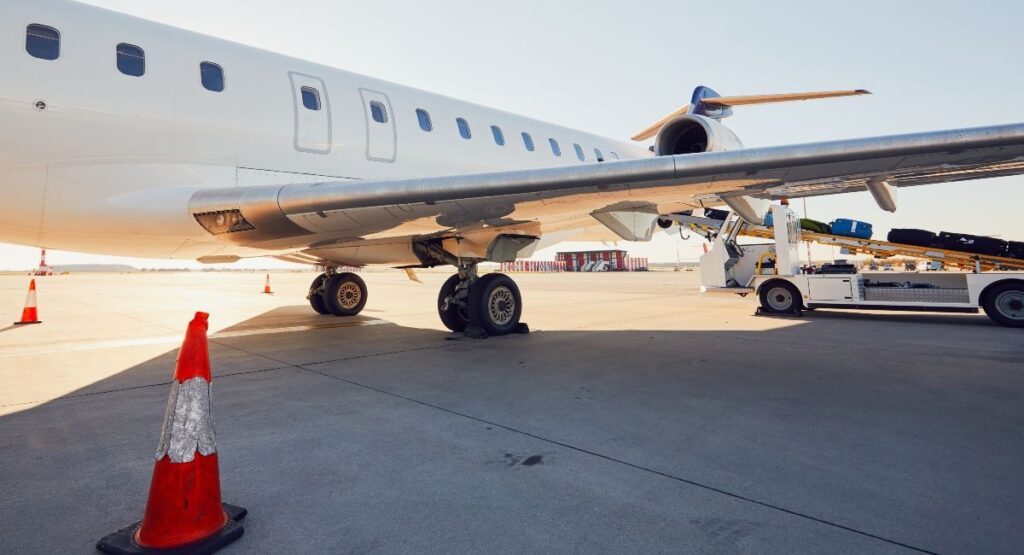
How Much Can You Actually Save on Empty Leg Flights?
The “50% or more” headline is real, but the range varies significantly by aircraft type, route, and lead time.
Light jets (seats 4–8, range ~1,500 miles): A standard one-way charter on a light jet might run $8,000–$15,000. An empty leg on the same route: $2,000–$6,000.
Midsize jets (seats 7–9, range ~2,500 miles): Standard charter: $15,000–$30,000. Empty leg: $5,000–$12,000.
Heavy jets (seats 10–16, range ~4,000+ miles): Standard charter: $30,000–$80,000. Empty leg: $10,000–$50,000.
In our experience sourcing private charters for corporate clients, the routes with the most consistent empty-leg availability are the seasonal corridors — Northeast to Florida in winter, LA to Vegas year-round, and East Coast to Aspen/Vail during ski season. We’ve seen clients save $15,000 on a single Teterboro-to-Miami leg by booking an empty repositioning flight with 72 hours’ notice.
What Are the Risks and Limitations of Empty Leg Flights?
Every broker site promotes the savings. Few explain the constraints. Here is what you need to know before booking.
The “Subject to Primary” clause. Most empty legs exist because of another client’s charter. If that primary client changes their itinerary — extends their trip, moves their departure time, changes their destination — your empty leg changes or gets canceled. This is standard in charter contracts, and it means your confirmed empty leg can disappear with 24–48 hours’ notice.
Cancellation and schedule changes are common. The question we get most from first-time empty-leg bookers is “what happens if it gets canceled?” — and the honest answer is that industry estimates of cancellation or schedule-change rates vary, with some operators reporting 10–15% and others citing figures closer to 20–30%, which is why backup planning matters. If you are booking an empty leg for a meeting you cannot miss, have a commercial backup flight identified before you commit.
Fixed routes and schedules. You do not choose the departure time or the airports. The operator does. If the empty leg departs at 6 a.m. from Van Nuys (VNY) to Scottsdale (SDL), that is the flight. You cannot request a 10 a.m. departure or a different arrival airport. Some operators will accommodate minor adjustments (a fuel stop, a slight route deviation), but these reduce or eliminate the discount.
Limited booking windows. Empty legs become available as operators finalize their charter schedules, which means most appear 48 hours to 2 weeks before departure. Last-minute availability is common; long-range planning is not. This makes empty legs better suited for flexible travel than for fixed-date commitments.
No return guarantee. Booking an outbound empty leg does not mean a return empty leg will be available. Plan (and budget) for a one-way commercial ticket or a full-price charter return.
How Do You Find and Book Empty Leg Flights in the USA?
There are three main channels for finding empty legs, each with trade-offs.
Charter aggregator platforms. Sites like Jettly, XO, and similar platforms aggregate empty legs from multiple operators into a searchable inventory. The advantage is breadth — you see legs from dozens of operators in one place. The disadvantage is that listings are not always current, and the platform takes a markup.
Direct from operators. Individual charter operators (NetJets, Flexjet, Wheels Up, regional operators) list their own empty legs on their websites or send them to their client lists. The advantage is that you are dealing directly with the operator, which can mean better pricing and more flexibility on minor changes. The disadvantage is that you are limited to one operator’s fleet and schedule.
Through a travel management company. A TMC like Worldgo that offers private jet services maintains relationships with multiple operators and receives empty-leg availability across fleets. The advantage is consolidated access (one call, multiple operators), backup planning when a leg cancels, and integration with your broader travel program. For corporate clients, this approach also produces proper expense documentation and spend reporting through the same booking platform used for commercial air travel.
When Do Empty Leg Flights Make Sense for Business Travel?
Empty legs are not a replacement for a predictable travel program. They are a tactical tool for the right situations.
Good fit: Flexible-date executive travel between high-demand corridors. Team trips where 4–8 people flying together makes the per-person cost competitive with business class. Last-minute trips where commercial options are sold out or inconvenient. Site visits to locations poorly served by commercial airlines.
Poor fit: Fixed-date commitments where cancellation is not an option. Recurring scheduled travel (better served by fractional ownership or charter memberships). Routes between smaller airports with low charter traffic (few empty legs available).
Corporate integration. Companies that use empty legs most effectively treat them as one option within a managed travel program — not as a standalone booking strategy. When a TMC monitors empty-leg availability alongside commercial fares and full-price charters, the travel coordinator can make a cost-optimization decision in real time: “There’s an empty leg TEB-to-OPF tomorrow at $4,200 — commercial would be $2,800 for two business-class seats, but the empty leg saves 3 hours of travel time and puts the team together.”
About This Guide
This guide draws on charter industry data for empty-leg availability and pricing benchmarks, FAA regulations governing Part 135 charter operations, and IRS rules for business travel expense deductions (Publication 463 and IRC Section 274). Pricing estimates reflect 2026 market conditions for U.S. domestic charters and are based on Worldgo’s experience sourcing private jet charters for corporate travel programs.
Frequently Asked Questions
Empty leg flights are private jet trips that fly without paying passengers, occurring when a charter aircraft needs to reposition between bookings or return to its home base. Operators sell these flights at 30–75% discounts because the flight cost (fuel, crew, landing fees) is already committed.
Pricing varies by aircraft type and route. Light jets typically run $2,000–$6,000 for an empty leg (vs. $8,000–$15,000 standard charter). Midsize jets: $5,000–$12,000 (vs. $15,000–$30,000). Heavy jets: $10,000–$50,000 (vs. $30,000–$80,000). Actual savings range from 30% to 75% off standard charter rates.
Yes. Empty leg flights use the same aircraft, pilots, and FAA Part 135 safety standards as full-price charters. The discount reflects the operator’s need to recover costs on a flight that would otherwise generate zero revenue — it does not reflect reduced safety or maintenance standards.
Yes. Most empty legs are subject to a “Subject to Primary” clause, meaning the flight can be canceled or changed if the primary charter client modifies their itinerary. Industry estimates of cancellation rates vary, with some operators reporting 10–15% and others citing higher figures. Always have a backup travel plan when booking an empty leg for time-sensitive commitments.
Most empty legs become available 48 hours to 2 weeks before departure, as operators finalize their charter schedules. Some legs on popular seasonal routes may appear earlier. Long-range planning (30+ days out) is generally not possible with empty legs.
A deadhead flight is another term for an empty leg — a flight where the aircraft is repositioning without revenue passengers. The terms “empty leg,” “deadhead flight,” “ferry flight,” and “repositioning flight” are used interchangeably in the charter industry.
Yes, if the flight is for legitimate business purposes and properly documented. Under IRS rules, private charter costs (including empty legs) are deductible as ordinary and necessary business travel expenses when the flight serves a bona fide business purpose. Proper substantiation — including date, destination, and business purpose per trip — is required. A managed travel program produces the documentation needed for IRS compliance.


