

Download your Free Corporate Travel Policy Template.
Business travel in 2026 costs more than most companies expect. If your company does not have a documented corporate travel policy, you are leaving cost savings on the table and leaving your employees without the guidance they need.
Your travelers are making their own booking decisions right now. Some are choosing last-minute flights, hotels outside your preferred vendors, and submitting expense reports that surprise your finance team every month. It is not their fault. They don’t have a policy to follow.
A business travel policy template gives you a fast and professional starting point. You customize it once, roll it out, and your entire travel program runs on the same rules.
Why Does Your Company Need a Formal Travel Policy?
A travel policy is the rulebook for your entire travel program, and without one, your company may be spending more than it needs to. The absence of a policy does not mean freedom for employees. It means inconsistency, excess spending, and compliance gaps that grow bigger over time.
What Does Unmanaged Travel Cost You?
When employees book outside a managed travel program, companies typically see:
- Higher average ticket prices because of last-minute bookings
- No access to negotiated vendor discounts
- Inconsistent expense claims that slow down reimbursements
- Poor visibility into total travel spend by department or project
- Gaps in duty-of-care and real-time traveler location tracking
These are not just operational headaches that can show up on your bottom line every quarter. The good news is that a well-written corporate travel policy fixes all of them.
What is a Corporate Travel Policy?
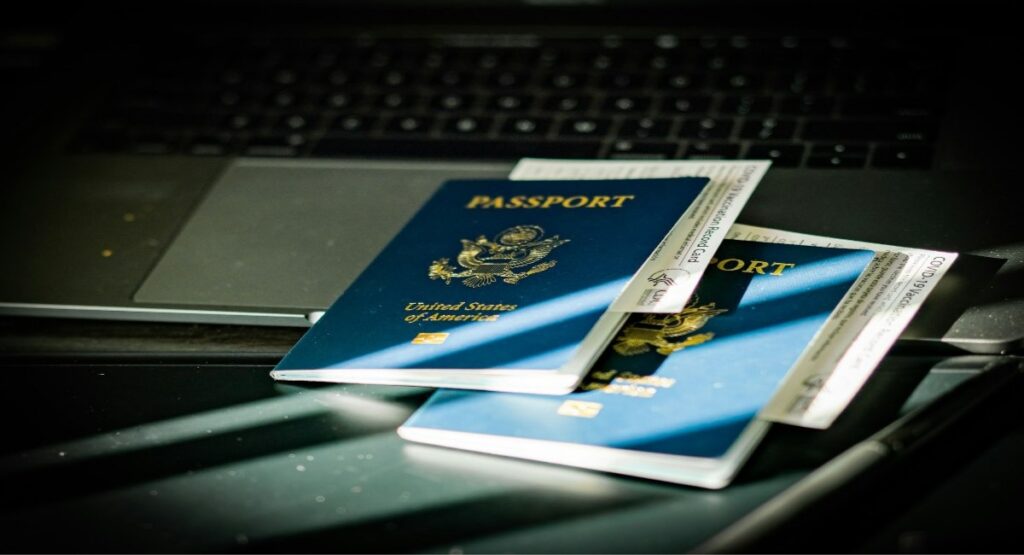
A corporate travel policy is a written document that outlines how employees should book travel, what the company will cover, and the steps to take when something goes wrong. It defines the boundaries of your travel program so everyone is working from the same playbook.
It applies to all employees traveling for company business, including full-time staff, executives, sales teams, field workers, and, in some cases, contractors and consultants traveling at your expense.
Who Does a Travel Policy Apply To?
Your policy should be specific about who it covers. Most policies include:
- Full-time employees on company-authorized trips
- Contractors and consultants traveling on the company’s dime
- Executives and C-suite travelers (with any applicable exceptions noted)
- Group travelers and meeting attendees
Pro Tip: If your company uses a travel management company, they can configure your policy rules directly into your booking platform. That turns your written policy into automatic guardrails at the point of booking.
Why Does Your Business Need a Travel Policy in 2026?
Travel compliance, cost visibility, and duty of care have moved from nice-to-have to essential. Here is what a formal policy does for each area of your business.
Cost Control
A travel policy sets spending limits for flights, hotels, and ground transportation. It steers your team toward preferred vendors and pre-negotiated rates. Companies with a managed travel program can save between 10% and 30% on total travel costs compared to those running unmanaged programs.
Duty of Care
You have a legal and ethical responsibility to know where your travelers are at all times, especially during disruptions, weather events, or security incidents. A formal policy defines your emergency protocols, insurance requirements, and response procedures so your team knows exactly what to do.
Travel Policy Compliance
Without a written policy, you cannot enforce spending rules or hold employees accountable for out-of-policy bookings. A documented policy gives your HR and finance teams the authority to flag non-compliant expenses and deny reimbursements for costs that fall outside the guidelines.
Reporting and Visibility
A travel policy connected to your booking platform gives your finance team real-time visibility into spend by department, trip type, and vendor. That data makes budget forecasting far more accurate and gives procurement teams leverage when negotiating vendor contracts.
Download your Free Corporate Travel Policy Template | Editable Sections, Compliance Checklist, Approval Matrix.
What Should Be Included in a Corporate Travel Policy?

A strong business travel policy template covers six core areas. Each one protects a different part of your travel program.
Booking Procedures
Define how employees must book travel. Specify your approved booking platform, the required advance booking window, and the rules for upgrades or premium-cabin requests. Set a clear expectation that all bookings go through one channel so your data stays consolidated.
Approved Vendors
List your preferred airlines, hotel chains, and car rental partners. These are the suppliers you have negotiated rates with. When employees book with approved vendors, your company saves money, earns program credits, and keeps spending trackable.
Expense Reimbursement Rules
Set per diem limits for meals, hotels, and incidentals by city tier. Define which expense categories require pre-approval, which are reimbursable up to a cap, and which are not covered. Specify your reimbursement timeline so travelers know when to expect payment.
Safety and Emergency Protocols
Include your emergency contact process, your travel insurance coverage details, and the steps employees must follow in the event of a flight cancellation, medical issue, or security incident. Your duty-of-care section should also describe how the company tracks traveler locations in real time.
Approval Workflows
Specify who approves travel requests and at what spend thresholds. For example, trips under $1,000 could be self-approved, while international travel or business-class bookings may need a manager’s sign-off. Clear approval flows reduce bottlenecks and keep finance in control.
Non-Compliance Consequences
State clearly what happens when employees book outside the policy. This might include denied reimbursements for out-of-policy expenses or a required review process. The goal is consistency, not punishment.
Download your Free Corporate Travel Policy Template
What are the Most Common Travel Policy Mistakes?
Even companies with a written policy make these errors. Knowing them up front saves you from having to fix them later.
- Setting limits without checking current market rates: If your hotel cap is $250/night in New York City or San Francisco, travelers will book outside policy every single time. So you need to review your per diems against live market data at least once a year.
- Skipping the approval workflow: A policy without a clear approval chain creates confusion and approval bottlenecks that slow down the whole team.
- Leaving out contractors and group travelers: These trips can be expensive. Your policy needs to explicitly cover them.
- Not connecting the policy to your booking platform: If the rules aren’t built into the system, they are easy to ignore. Technology makes compliance automatic.
- Forgetting to update the policy annually: Travel markets change. Your policy should be reviewed and refreshed at least once a year and whenever you switch platforms or preferred vendors.
- Omitting the emergency protocol section: This is the section most companies skip. It is also the one thing employees need most when something goes wrong.
Download Your Free Corporate Travel Policy Template

You do not need to build your travel policy from scratch. The Worldgo corporate travel policy template gives you a fully editable document that covers every section above, plus a built-in compliance checklist and an approval matrix ready to plug in.
The template includes:
- Editable policy sections for booking procedures, expense rules, approved vendors, and emergency protocols
- A compliance checklist for HR and finance teams
- An approval matrix with sample spend thresholds that you can adjust to your company
- Tip notes explaining how to customize each section for your specific program
- Space for your company logo, branding, and policy effective date
Get Your Free Template
This template is built for HR managers, travel coordinators, and finance leads. Formalize your travel program or update an outdated policy in minutes. Get your Free Corporate Travel Policy Template.
How Can a Travel Management Company Help You Enforce Your Policy?
A well-written policy is only as strong as your ability to enforce it. That is where a travel management company comes in.
At Worldgo, we work directly with your HR, finance, and operations teams to build your travel policy into your booking platform. Every booking is automatically checked against your rules—no manual review required.
Our team handles:
- Policy configuration built directly into your booking tool
- Preferred vendor setup and rate negotiations on your behalf
- 24/7 live traveler support for last-minute changes and disruptions
- Real-time reporting so finance always knows what is being spent
- Duty-of-care tracking across all active travelers, every trip
When your policy lives inside the system, travel policy compliance improves automatically. Employees book within guardrails, spend becomes predictable, and your finance team spends less time chasing out-of-policy receipts. Learn about our services.
FAQs: Corporate Travel Policy
Start with your company’s specific needs, then build each section around the six core areas:
Define who the policy covers and who owns it
Set your approved booking channel and advance booking windows
List preferred vendors and any negotiated rates
Establish per diem limits and reimbursable expense categories
Document your approval workflow and spend thresholds
Add your duty-of-care and emergency contact protocols
Review a draft template, customize the placeholders, and have HR or legal sign off before distributing.
Most corporate travel policies are between two and five pages. Keep it short enough for employees to read and remember, but thorough enough to cover booking rules, expense reimbursement, duty-of-care requirements, and consequences for non-compliance.
Enforcement is typically shared between HR, finance, and your travel management company. HR owns the policy document and communicates it to employees. Finance enforces expense limits and approvals. A travel management company like Worldgo helps enforce compliance automatically at the point of booking.
Enforcement is typically shared between HR, finance, and your travel management company. HR owns the policy document and communicates it to employees. Finance enforces expense limits and approvals. A travel management company like Worldgo helps enforce compliance automatically at the point of booking.
Review your travel policy at least once a year. Update it whenever a major change occurs, such as a new booking platform rollout, changes to preferred vendors, updated per diem rates, or new compliance requirements in your industry. A stale policy is as risky as no policy at all.
The 4 C’s are cost, compliance, convenience, and care. Cost covers spend control and vendor negotiation. Compliance means keeping bookings within policy. Convenience refers to a smooth booking experience for travelers. Care covers duty-of-care obligations and traveler safety.
The most common ones are setting flat rates that don’t account for differences in city costs, forgetting to update limits annually as hotel and meal prices rise, and leaving out incidentals entirely. Some companies also apply domestic per diem rates to international travel by default, which rarely reflects actual costs on the ground.


